About the Journal

Reog: Journal of Ecoethnoscience Education is a scholarly journal dedicated to advancing research and scholarly discussion related to ecological (environmental) education, ethnoscience education, and their intersection. Reog welcomes scholarly works situated in local, national, regional, and international contexts, provided that they offer clear academic contributions and insights relevant to the broader scholarly community. The journal particularly encourages contextually grounded research that connects ecological knowledge, local and indigenous knowledge, cultural practices, environmental issues, and educational innovations with broader science education and sustainability perspectives.

Reog accepts several types of manuscripts, including Original Research Articles, Review Articles (Systematic Literature Reviews and Meta-Analyses), and Comments and Criticism. The Comments and Criticism section forms part of the journal’s post-publication policy and provides a forum for scholarly comments, critical responses, and academic discussions concerning articles previously published in Reog. Authors of the Original Article may be invited to submit an Author Response, which will be published within the same section. This mechanism is intended to promote scholarly discussion, critical evaluation, transparency, and constructive academic dialogue after publication.

Reog is published by PT Mitra Edukasi dan Publikasi and is issued twice a year, in January and July, with approximately 5–7 articles published in each issue.

Journal Information

  1. Journal Title: Reog: Journal of Ecoethnoscience Education
  2. Journal Initials: REOG
  3. Journal Abbreviation: Reog J. Ecoethnoscience Educ.
  4. Publication Frequency: twice a year, in January and July
  5. DOI: https://doi.org/10.58706/reog
  6. e-ISSN: 3090-9465
  7. Editor in Chief: Dr. Utama Alan Deta, S.Pd., M.Pd., M.Si.
  8. Managing Editor:
    a. Dr. Wirawan Fadly, M.Pd.
    b. Dr. Nurita Apridiana Lestari, S.Pd., M.Pd.
  9. E-mail: [email protected]
  10. WhatsApp: +62 895-4298-51500
  11. Publisher: Mitra Edukasi dan Publikasi
  12. Status: New Journal, prospective accreditation (target: 2027/2028)
  13. Manuscript Language: English or Indonesia

Announcements

Crossmark Implementation and Strengthening Reog’s Publication Standards under the New National Accreditation Framework

2026-09-15

Reog: Journal of Ecoethnoscience Education has begun implementing Crossmark, a service provided by Crossref that enables readers to verify the current status of published articles and identify post-publication updates. All articles published from 1 January 2027 onward will fully implement Crossmark, including the official “Check for updates” button on both article webpages and PDF files. Articles published before this date will be progressively integrated into Crossmark on the article webpage only, while the original PDF files will remain unchanged. Further information is available in the Crossmark and Post-Publication Update Policy.

As part of the journal’s continuing development, Reog will also introduce further updates to its editorial and publication policies, journal website, manuscript template, author guidelines, editorial documents, and other supporting procedures in the near future. These updates are intended to align the journal’s management and publishing practices with the latest Indonesian national scientific journal accreditation framework under Permendiktisaintek Number 9 of 2026 and Kepdirjen Saintek Number 374/DST/D.D1/HM.01.01/2026, as well as current good practices in scholarly publishing.

Read more about Crossmark Implementation and Strengthening Reog’s Publication Standards under the New National Accreditation Framework

Current Issue

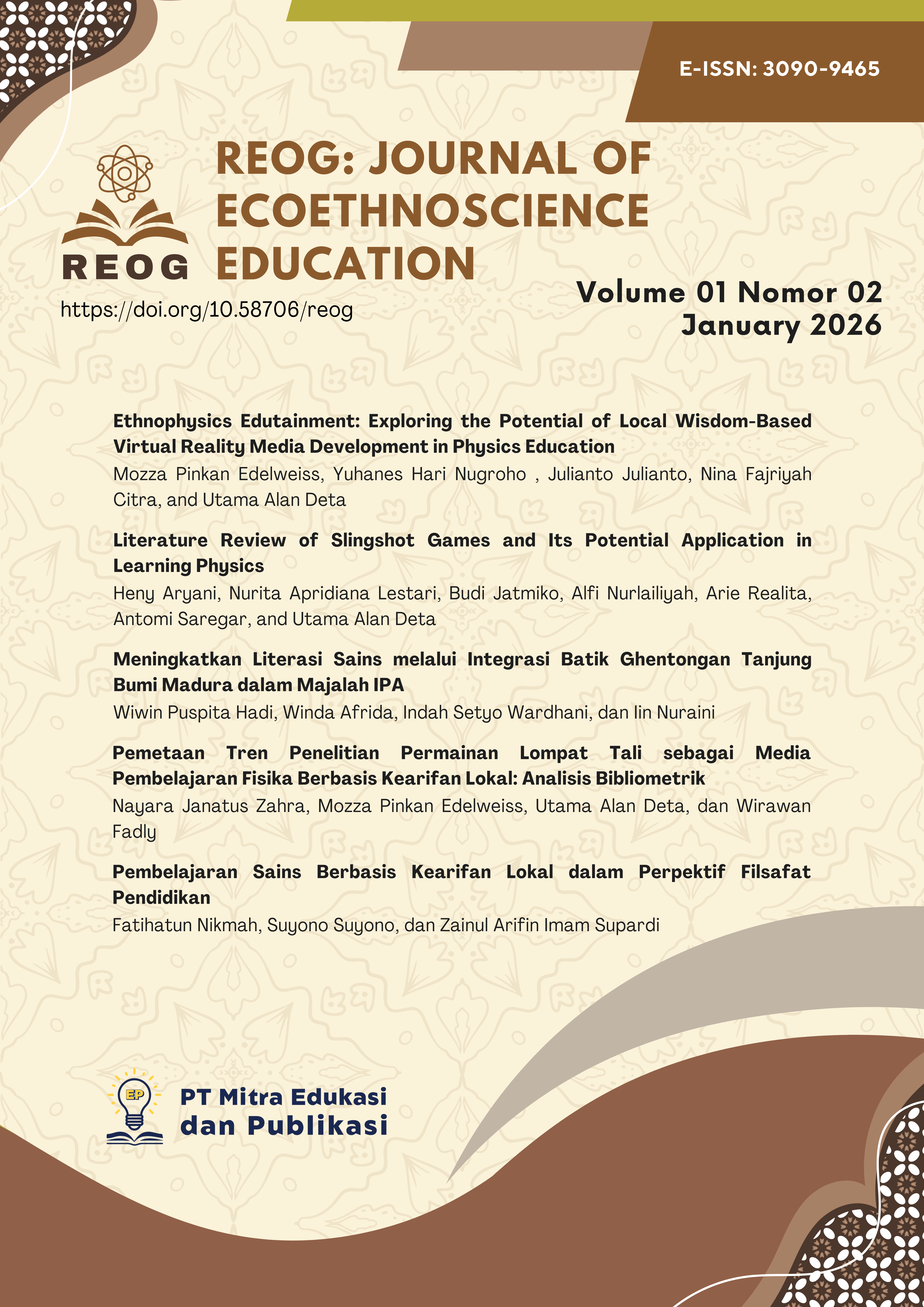
Vol. 1 No. 2 (2026): January 2026
					View Vol. 1 No. 2 (2026): January 2026

Authors' Affiliation: SMA Negeri 7 Surabaya, SMA Negeri 1 Waru Sidoarjo, SMP Negeri 2 Tanjungbumi Bangkalan, Universitas Negeri Surabaya, UIN Raden Intan Lampung, Universitas Trunojoyo Madura, UIN Kiai Ageng Muhammad Besari Ponorogo, and Monash University

Participated Country: Indonesia and Australia


Published: 2026-01-01

Articles

View All Issues

Estimated Manuscript Processing Timeline

The estimated processing time for each stage of the editorial workflow is as follows:

Editorial Stage Estimated Processing Time Estimated Cumulative Time
Initial Check by Editor 1–7 days 1–7 days
Peer Review Process 2–6 weeks 3–8 weeks
Final Check by Editor 1–2 weeks 4–10 weeks
Copyediting, Layout Editing, and Proofreading 1–2 weeks 6–12 weeks

Note: Actual processing times may vary depending on manuscript quality and readiness, Reviewer availability and feedback, the extent of revisions required, and the promptness of Authors in responding to revision requests. Cumulative time is calculated from the date of manuscript submission.

Under ideal conditions, where the manuscript meets the journal requirements, Reviewers are readily available, and no major revision is required, the process from submission to acceptance may take as little as four weeks. However, the actual duration may be longer depending on the editorial process and the outcome of peer review. This estimate does not constitute a guarantee of acceptance within a specific period.

Submission does not guarantee acceptance or publication. Manuscripts that satisfy the Initial Check proceed to peer review and editorial evaluation before they may be considered for acceptance. A manuscript cannot receive an acceptance decision before completing the applicable peer-review and editorial evaluation process. For full details, please refer to the Estimated Manuscript Processing Timeline.

Statement of Journal Independence and Integrity

Reog: Journal of Ecoethnoscience Education is committed to maintaining integrity and editorial independence throughout the scholarly publishing process. Reog does not collaborate with consultants, agents, brokers, or publication service providers that promise acceptance, Letters of Acceptance (LoA), accelerated editorial decisions, or publication by circumventing the journal's editorial procedures.

All manuscripts must be submitted directly by the Authors through the official Reog OJS system, and editorial communication is conducted through the journal system or official Reog communication channels. No third party has the authority to guarantee manuscript acceptance, influence peer review, or determine editorial decisions.

Editorial decisions are made independently by the Editorial Team on the basis of scholarly quality, peer-review outcomes, research integrity, editorial policies, and publication ethics. The Publisher does not interfere with individual editorial decisions.

For full details, please refer to the Statement of Journal Independence and Integrity.