About the Journal

Reog: Journal of Ecoethnoscience Education is a peer-reviewed journal dedicated to publishing research on ecological (environmental) education, ethnoscience education, and their intersection. This journal serves as a platform for Teachers, Lecturers, and Researchers to share innovations, theoretical discussions, and empirical research findings that contribute to the development of sustainable and culturally relevant science education. REOG is published by  PT Mitra Edukasi dan Publikasi. The journal is issued twice a year, featuring 5–7 articles per issue.

Journal Information

  1. Journal Title: Reog: Journal of Ecoethnoscience Education
  2. Journal Initials: REOG
  3. Journal Abbreviation: Reog J. Ecoethnoscience Educ.
  4. Publication Frequency: twice a year, in January and July
  5. DOI: https://doi.org/10.58706/reog
  6. e-ISSN: 3090-9465
  7. Editor in Chief: Dr. Utama Alan Deta, S.Pd., M.Pd., M.Si.
  8. Managing Editor:
    a. Dr. Wirawan Fadly, M.Pd.
    b. Dr. Nurita Apridiana Lestari, S.Pd., M.Pd.
  9. E-mail: [email protected]
  10. WhatsApp: +62 895-4298-51500
  11. Publisher: Mitra Edukasi dan Publikasi
  12. Status: New Journal, prospective accreditation (target: 2027/2028)
  13. Manuscript Language: English or Indonesia

Announcements

Updates to Publication Ethics, Generative AI Policy, and Peer Review Process

2026-07-04

Reog: Journal of Ecoethnoscience Education has updated its Publication Ethics and Malpractice Statement, Generative Artificial Intelligence Utilization Policy, and Peer Review Process to strengthen transparency, accountability, confidentiality, editorial independence, peer-review integrity, authorship responsibility, protection of the integrity of the scholarly record, and clarity of the editorial workflow from manuscript submission to publication. These updates include more detailed explanations of the responsibilities of Editors, Reviewers, authors, and the Reog Editorial Team; guidance on authorship disputes and authorship changes; procedures for complaints, appeals, allegations of publication ethics violations, Correction, Erratum, Corrigendum, Expression of Concern, manuscript withdrawal, article retraction, article removal, article replacement, post-publication changes; and clarification that administrative, review-related, technical, or production-related fees are regulated under Reog’s Publication Fees Policy and do not influence editorial decisions.

Reog has also updated the explanation of its Peer Review Process to be more detailed and comprehensive, including the six editorial stages: Submission, Initial Check, Peer Review, Final Check, Editing & Proofreading, and Publication; the implementation of a double-blind peer review system; assessment by at least two independent Reviewers; manuscript assessment criteria; confidentiality of the review process; management of conflicts of interest; and provisions regarding authors’ suggestions of potential Reviewers. In addition, Reog has clarified the responsible use of generative artificial intelligence or Generative Artificial Intelligence (Gen AI), AI-assisted technologies, and language-assistance tools. Authors are required to disclose the use of such tools in the manuscript; AI tools cannot be listed as authors or co-authors; and AI must not be used to replace scholarly judgment or to manipulate data, images, citations, or references. Reviewers and Editors may use AI only for limited supportive purposes while maintaining confidentiality, privacy, peer-review integrity, editorial independence, and human accountability.

Read more about Updates to Publication Ethics, Generative AI Policy, and Peer Review Process
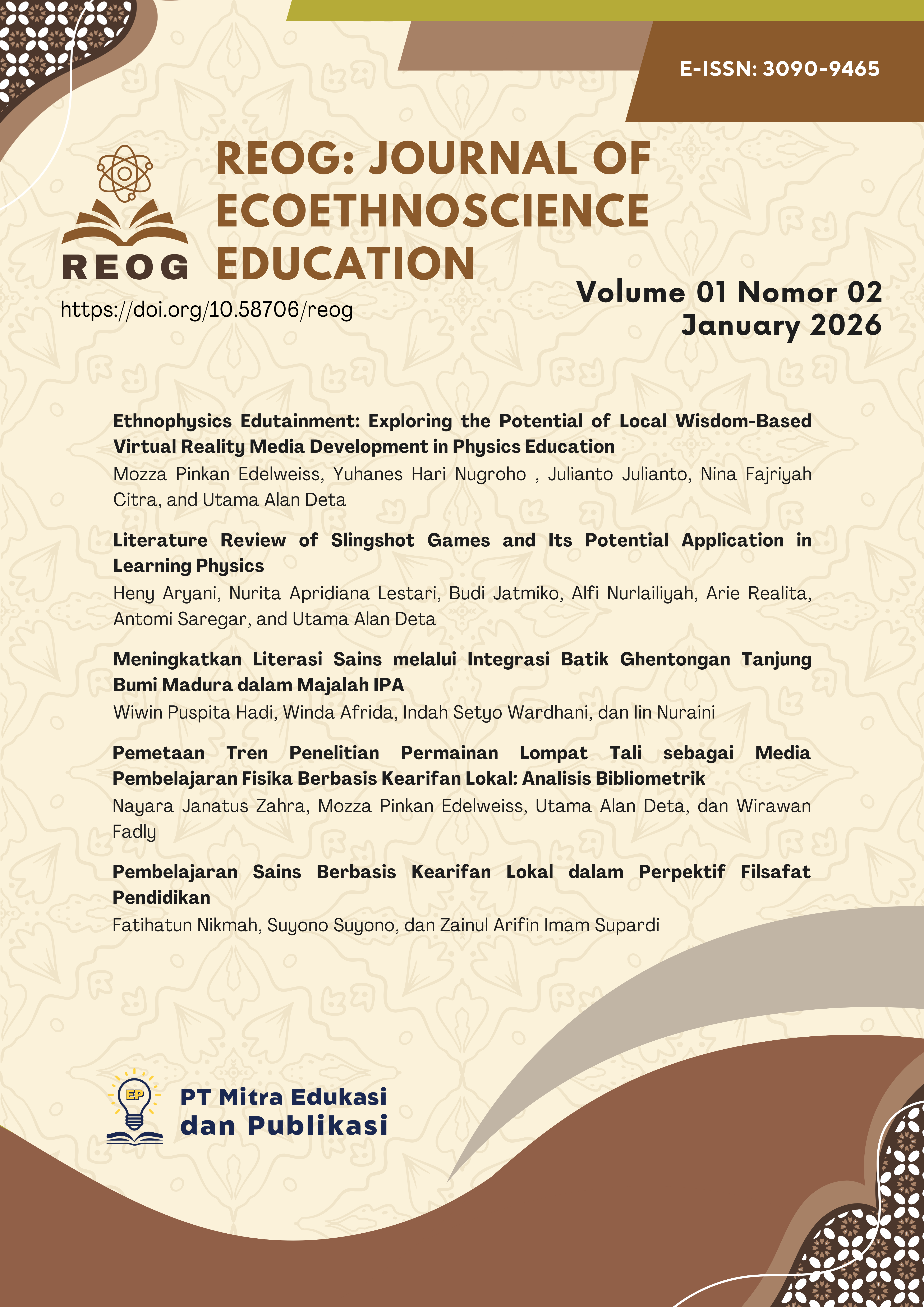

Current Issue

Vol. 1 No. 2 (2026): January 2026
					View Vol. 1 No. 2 (2026): January 2026

Authors' Affiliation: SMA Negeri 7 Surabaya, SMA Negeri 1 Waru Sidoarjo, SMP Negeri 2 Tanjungbumi Bangkalan, Universitas Negeri Surabaya, UIN Raden Intan Lampung, Universitas Trunojoyo Madura, UIN Kiai Ageng Muhammad Besari Ponorogo, and Monash University

Participated Country: Indonesia and Australia


Published: 2026-01-01

Articles

View All Issues

Estimated Manuscript Processing Timeline

Estimated processing time at each stage of the editorial workflow.

Submission Stage Estimated Processing Time Estimated Cumulative Time
Initial Check by Editor 1–7 days 1–7 days
Peer Review Process 2–6 weeks 3–8 weeks
Final Check by Editor 1–2 weeks 4–10 weeks
Copyediting, Layout Editing, and Proofreading 1–2 weeks 6–12 weeks

Note: Actual processing times may vary depending on manuscript quality, reviewer availability and feedback, and the promptness of authors during the revision process. Cumulative time is calculated from the date of manuscript submission.

As an additional note, under ideal conditions and in the absence of major revisions, the processing time from submission to acceptance may take a minimum of four weeks. However, the actual duration may be longer depending on the editorial process and the outcome of the peer review.

Please note that submission does not guarantee acceptance. All manuscripts must pass a rigorous peer review process and editorial evaluation to be considered for publication in this journal. For full details, please refer to Estimated Manuscript Processing Timeline.


Statement of Journal Independence and Integrity

Reog: Journal of Ecoethnoscience Education is committed to maintaining integrity and independence in all aspects of the scholarly publishing process. The journal does not collaborate with consultants, agents, brokers, or publication service providers of any kind. All manuscripts must be submitted directly by the authors through the official OJS system, and communication is conducted exclusively through the journal’s official contact channels. For full details, please refer to our Statement of Journal Independence and Integrity.